
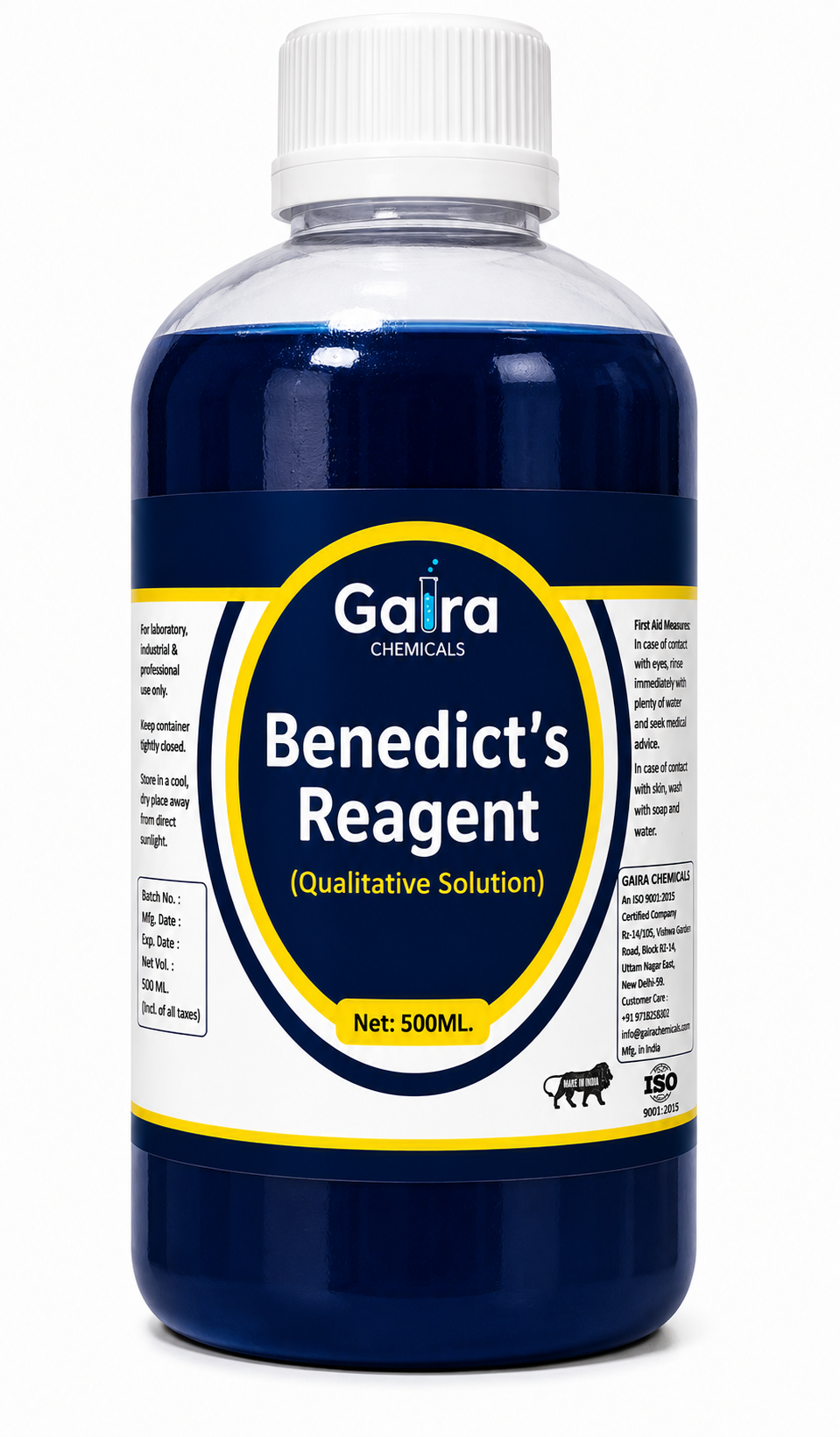
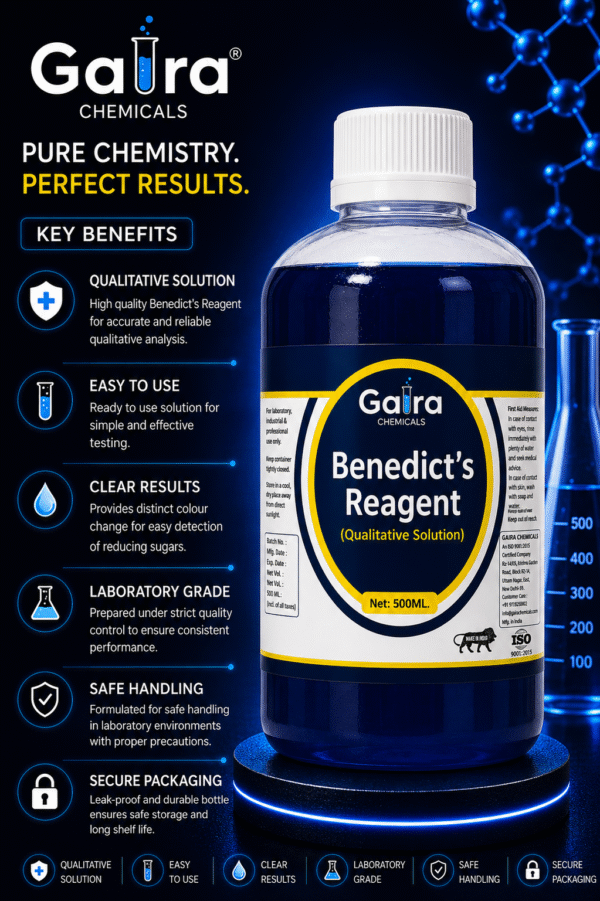
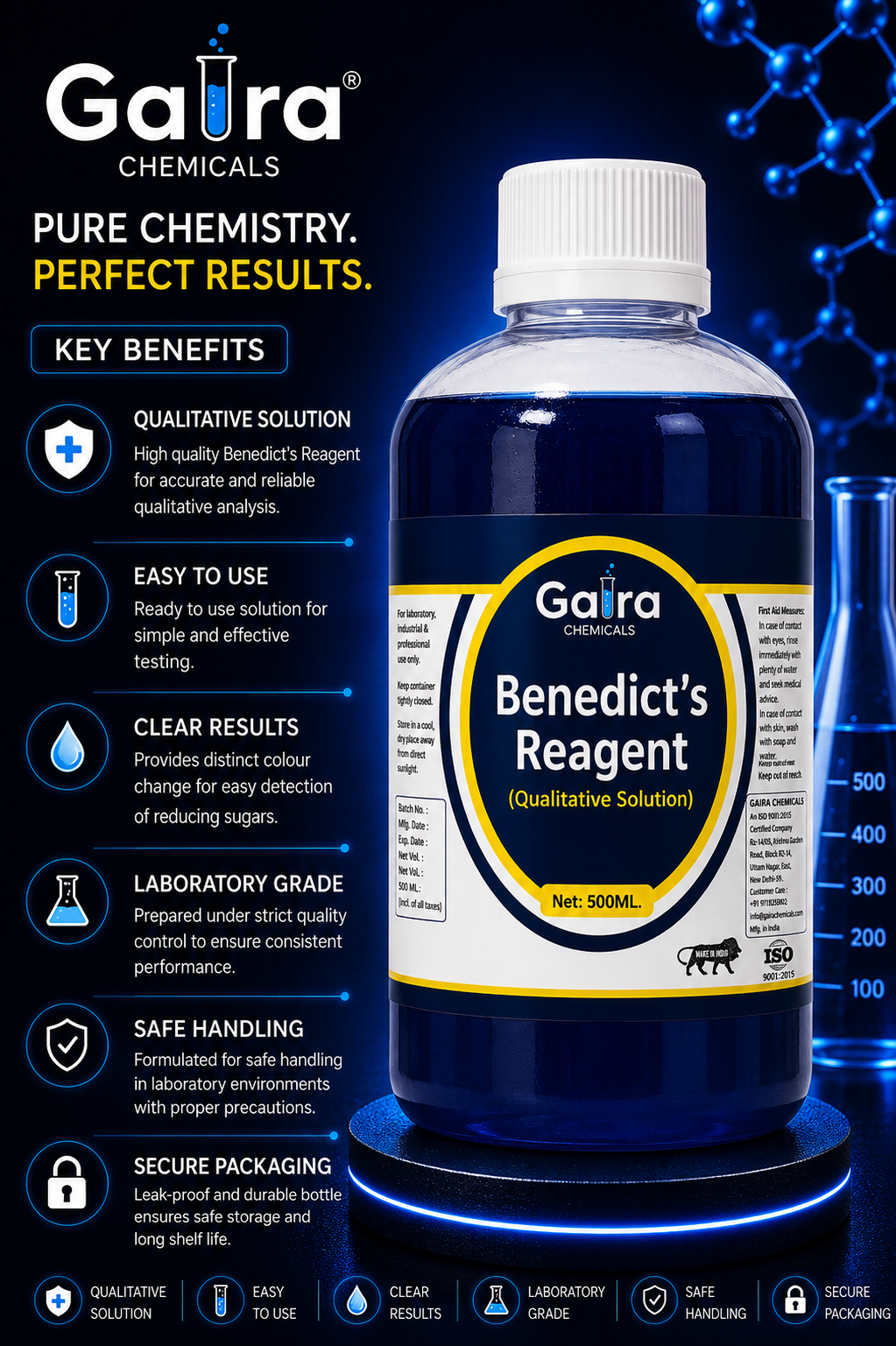
Benedict’s Reagent, also known as Benedict’s Solution, is a laboratory testing reagent widely used for the qualitative detection of reducing sugars in suitable samples. It is commonly used in biochemistry laboratories, educational institutions, research facilities, and general analytical testing procedures.
The reagent typically contains copper(II) sulfate, sodium citrate, and sodium carbonate. During the prescribed test procedure, reducing sugars react with the reagent upon heating and can produce a visible colour change. Depending on reaction conditions and the amount of reducing sugar present, the colour may progress from blue toward green, yellow, orange, or brick-red.
Benedict’s Reagent is particularly useful for demonstrating and identifying reducing sugars such as glucose in suitable laboratory samples. Its ready-prepared liquid formulation makes it convenient for routine carbohydrate testing, biochemical experiments, educational practicals, and qualitative chemical analysis.
For consistent results, appropriate sample preparation, heating conditions, reagent quantity, and laboratory procedures should be followed. The reagent should be stored properly and protected from contamination.
Key Features
- Ready-to-use laboratory reagent
- Characteristic blue solution
- Used for reducing sugar detection
- Suitable for carbohydrate testing
- Provides visible colour reaction
- Useful for biochemical analysis
- Suitable for educational practicals
- Convenient liquid formulation












Reviews
There are no reviews yet.